Featured Essay
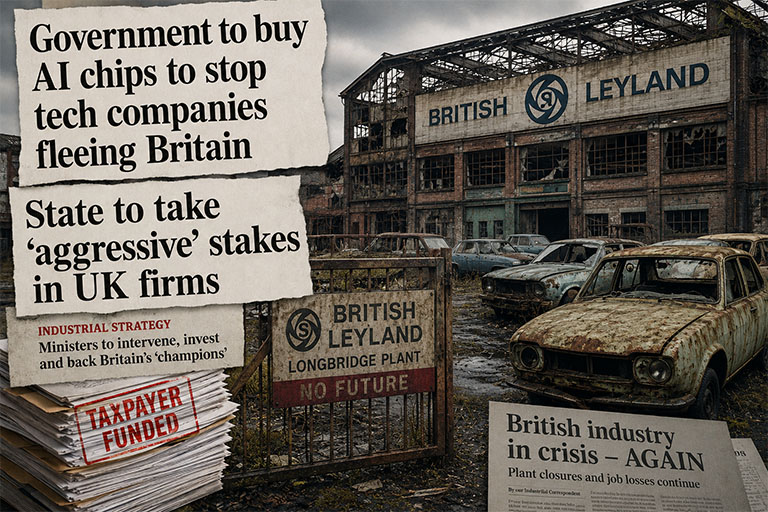
Back to the Future IV: Return of British Leyland
Whitehall wants to run industry again. What could possibly go wrong?

Whitehall wants to run industry again. What could possibly go wrong?
Recently published opinion and analysis.
Faced with falling investment and an increasingly hostile business climate, Labour has reached for the only solution it truly understands: more state, more intervention and more bureaucracy. We have seen this experiment before. It failed then, and it will fail again.
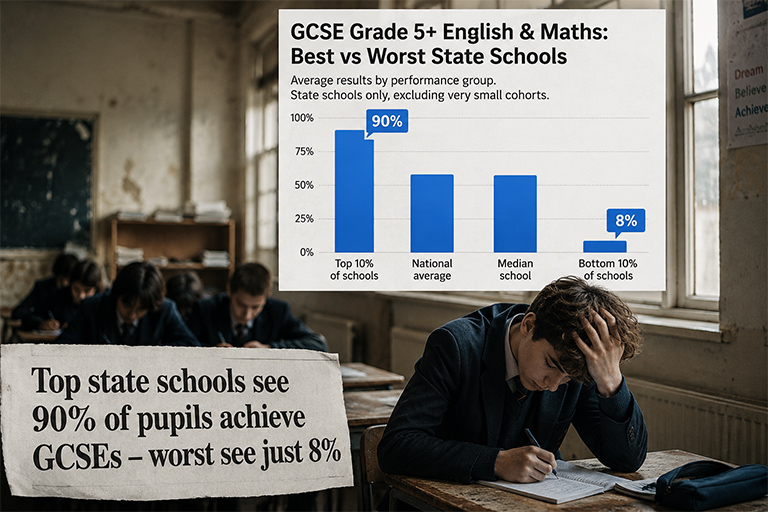
Britain's greatest educational divide is not between private and state schools, but between the best and worst state schools. Abolishing independent education would not change who succeeds. It would simply redirect affluent, ambitious and well-connected parents into the state sector, leaving the weakest pupils competing for even fewer opportunities.
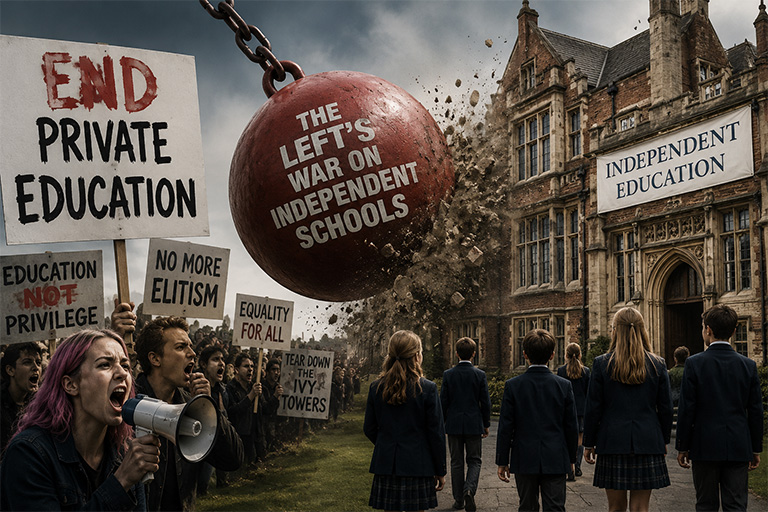
The attack on private education is often presented as a crusade for equality. In reality, it is something quite different. Independent schools challenge some of the Left's deepest assumptions about society, proving that parental choice, competition and individual aspiration can outperform state control. That is why the campaign against them persists despite the costs, the consequences and the evidence. The target is not what independent schools do. The target is what they represent.

Capitalism is often portrayed as a modern invention imposed upon society by financiers and corporations. In reality, it is simply the natural extension of ordinary human behaviour: specialisation, cooperation and voluntary exchange. From a Neolithic tribesman trading a stone axe for two fish to the complex global markets of today, free exchange has always allowed individuals to coordinate knowledge, allocate resources and improve living standards more effectively than central planning ever could.

Britain has built far more than a housing market. It has built an entire economic model upon ever-rising property values. As house prices soared, politicians congratulated themselves on “growth”, homeowners refinanced, banks expanded lending and the country consumed against paper wealth. But property prices cannot indefinitely outgrow purchasing power. Now, with transactions slowing and affordability breaking down, Britain is beginning to discover what happens when an economy built on asset inflation starts running out of road.

Why does political disagreement increasingly provoke outrage rather than argument? Because for many modern progressives, politics is no longer simply about economics or governance - it has become a moral identity, complete with saints, heretics and sacred institutions. And history suggests that societies rarely emerge peacefully once politics takes on the character of religion.
Faced with falling investment and an increasingly hostile business climate, Labour has reached for the only solution it truly understands: more state, more intervention and more bureaucracy. We have seen this experiment before. It failed then, and it will fail again.
Britain's greatest educational divide is not between private and state schools, but between the best and worst state schools. Abolishing independent education would not change who succeeds. It would simply redirect affluent, ambitious and well-connected parents into the state sector, leaving the weakest pupils competing for even fewer opportunities.