
Britain Is Losing More Than Titles in the Assault on the Hereditary Peers
As experienced hereditary peers are pushed aside, Britain risks replacing independent public servants with careerist political appointees.

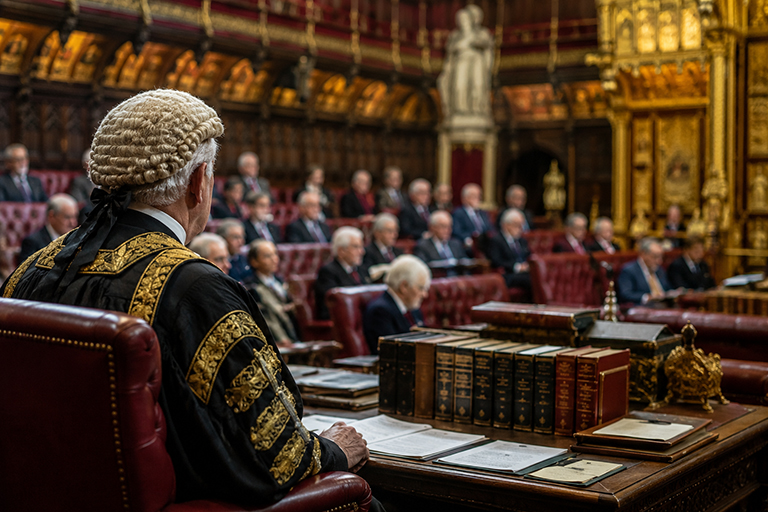
Britain Is Losing More Than Titles in the Assault on the Hereditary Peers
The campaign to remove hereditary peers from the House of Lords is presented by its supporters as a triumph of modern democracy over ancient privilege. In reality, it risks becoming yet another act of national self-harm by a political class obsessed with symbolism and blind to competence.
The argument is always framed in the crudest possible terms: hereditary peers are supposedly "unelected aristocrats" whose very existence offends modern egalitarian sensibilities. But this caricature entirely misses the point of what many hereditary peers have actually contributed to British public life.
The House of Lords was never intended to be a mirror image of the Commons. Its value lies precisely in the fact that it contains people who are not career politicians, not party apparatchiks and not creatures of the latest ideological fashion.
Increasingly, Britain risks replacing men and women of experience, independence and public duty with political appointees whose primary qualification is loyalty to party leadership.
The Earl of Oxford and Asquith
A perfect example is the Earl of Oxford and Asquith on the Crossbenches.
Few modern politicians could rival his depth of experience. A distinguished diplomat, he spent decades representing Britain abroad at the highest levels, including serving as ambassador to major powers and navigating some of the most sensitive geopolitical questions of the late twentieth century.
He is intelligent, measured, informed and deeply familiar with the machinery of state. More importantly, he approaches legislation with the calm seriousness of someone who has actually spent a lifetime making consequential decisions.
Are these really the sort of people Britain wishes to discard?
And for what exactly? To make room for another batch of short-term political operatives elevated to the Lords after years of party management, media consultancy or ideological activism?
One does not need to romanticise aristocracy to recognise the absurdity of this trade.
Public Service Without Careerism
Perhaps even more revealing is the example of Lord Russell of Liverpool.
For decades, he has worked tirelessly within the Lords not in pursuit of ministerial office, celebrity or political advancement, but because he genuinely cared about causes that would otherwise receive little attention at all.
This is one of the least appreciated virtues of the upper chamber at its best. The Lords has historically provided space for individuals who champion obscure, difficult or unfashionable issues precisely because they are free from the constant electoral calculations that dominate modern politics.
Many ordinary politicians simply do not have the time or incentive to pursue such matters. Their careers depend on media exposure, party advancement and surviving the next election cycle.
But peers such as Lord Russell of Liverpool embody an older understanding of public service: duty pursued quietly, persistently and often without recognition.
That spirit is becoming increasingly rare in modern Britain.
The Cult of Democratic Purity
Of course, no institution should be beyond reform. But Britain has developed an unhealthy tendency to dismantle longstanding institutions simply because they fail modern ideological purity tests.
The House of Lords was designed not as a rival democratic chamber, but as a brake upon political fashion and legislative impulsiveness. Its strength has always come from diversity of background and independence of thought.
Hereditary peers often entered the chamber without owing their position to party patronage. Ironically, this frequently made them more independent-minded than many life peers who arrived there through political favour.
That independence matters.
A second chamber entirely populated by political appointees risks becoming little more than an extension of the professional political class — the very class for which public trust has collapsed across the Western world.
A Nation That Discards Its Best Traditions
Britain’s constitutional success has historically rested upon balance, continuity and gradual evolution. We were once wise enough to understand that institutions should be judged not by abstract theory, but by whether they actually worked.
The hereditary principle undoubtedly has imperfections. But it has also produced generations of individuals raised with a profound sense of duty, continuity and national stewardship — qualities now often absent from an increasingly transactional political culture.
Modern Britain seems determined to discard every institution that connects the present to the past, replacing inherited wisdom with managerial technocracy and ideological conformity.
The tragedy is that many of the loudest voices demanding "modernisation" rarely ask the obvious question:
Are the replacements actually better?
Looking at much of today’s political class, the answer is becoming painfully clear.
Also by Dominic Harbury

One Rule for Politicians, Another for You
Angela Rayner’s stamp duty case has reignited a growing public suspicion that the political class no longer plays by the same rules as everyone else. While ordinary Britons face relentless penalties and scrutiny from the state, well-connected insiders too often seem to receive understanding, exemptions and leniency.

Starmer’s Britain Is Drifting Back to the Failed Politics of the 60s and 70s
Sir Keir Starmer promised to drag Labour into the modern age. Instead, his government is beginning to resemble a political time machine back to the 1970s: expanding union power, nationalising industry, edging Britain closer to Brussels and piling debt upon debt onto an already stagnant economy. Britain has seen this experiment before — and it did not end well.

We Have Forgotten What Education Is Really For
Modern education has become obsessed with exams, careers and economic utility while neglecting the deeper purpose of learning itself. As Britain abandons classical liberal education, a generation is growing up increasingly detached from history, literature and the intellectual traditions that once sustained Western civilisation.