
Politicians: You Had One Job
Europe’s ruling class once built roads, power stations and functioning public services. Today it gives us paper straws, bottle-top regulations and eight different bins for rubbish.
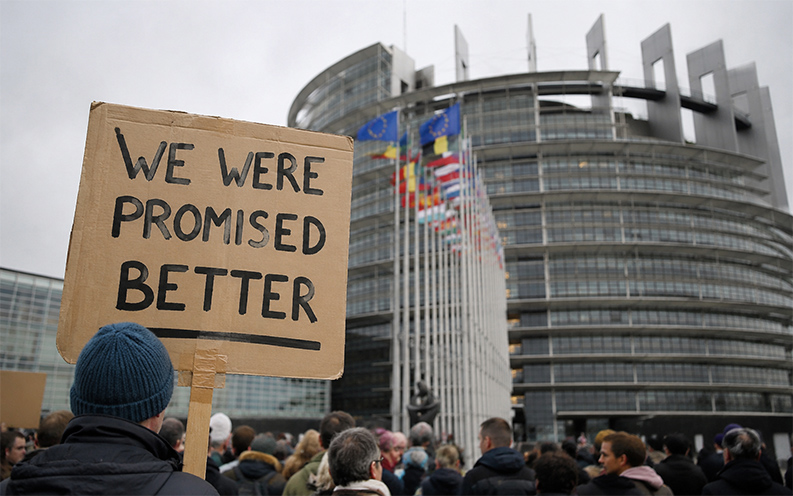
European Politicians: You Had One Job to Do
Politicians are elected to make our lives better. That's it. It's that simple. For years, that was the accepted job description for any elected representative. They might disagree on the implementation, according to their political beliefs, but everyone agreed politicians were there to improve people's lives.
It seems pretty obvious. Why on earth should we vote for — and pay for — someone whose policies make our lives worse? Politicians were not elected to lecture us on how to live. They had one job to do: make our lives better.
And for quite a long time, this worked. Politicians built power stations to keep energy prices low. They made sure we had a functioning police force to keep crime rates down. They made sure we had a functioning army and navy to keep us safe.
Somewhere in the early 21st century, however, that changed. Suddenly, politicians stopped believing they represented the people and started believing they knew better than the people.
The 1950s and 60s saw a huge expansion in sewage and sanitation infrastructure. The same period saw the introduction of standardised road markings and clearer traffic rules. Those are clearly good things regardless of whether you're on the political left or right. Even Count Binface would struggle to justify a policy where drivers simply choose for themselves which side of the road to use.
Today we have paper straws and bottle tops welded to bottles. We have tax-subsidised wind farms being paid to shut down because they have been built in areas so remote that the grid often cannot deliver the electricity efficiently to the main centres of demand.
I do not feel that my life has been improved by being forced to drink through a paper straw. As water-resistant materials go, paper is a bit of a disappointment. Nor do I feel my life is improved by plastic bottle tops poking me in the eye every time I take a drink.
Today we learned that a new scheme is being rolled out across English councils that will impose fresh sorting rules on households disposing of rubbish, saddling residents with eight — yes, eight, it is not a typo — different containers for waste.
General mixed plastic is virtually unrecyclable. Many types cannot simply be melted together because different polymers behave differently. Thus, a huge portion of so-called recycling either ends up in landfill here or is exported to a landfill abroad. In other words, the taxpayer pays for rubbish to be sent halfway across the world while European politicians congratulate each other on hitting green targets.
It is no wonder there is growing political opposition across the Western world. The entire point of democracy — which is a costly thing to maintain — was that politicians would represent the people and work tirelessly to improve their lives.
In 1971, BBC aired its first Open University lecture. The broadcasts were finally phased out in 2006. Today, if you want to receive a lecture, you have to settle for the House of Commons.
Also by Charles H. Thyme
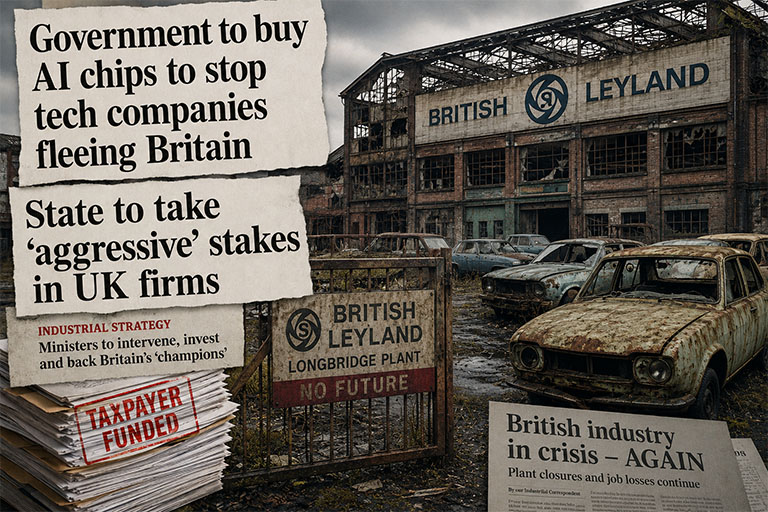
Back to the Future IV: Return of British Leyland
Faced with falling investment and an increasingly hostile business climate, Labour has reached for the only solution it truly understands: more state, more intervention and more bureaucracy. We have seen this experiment before. It failed then, and it will fail again.
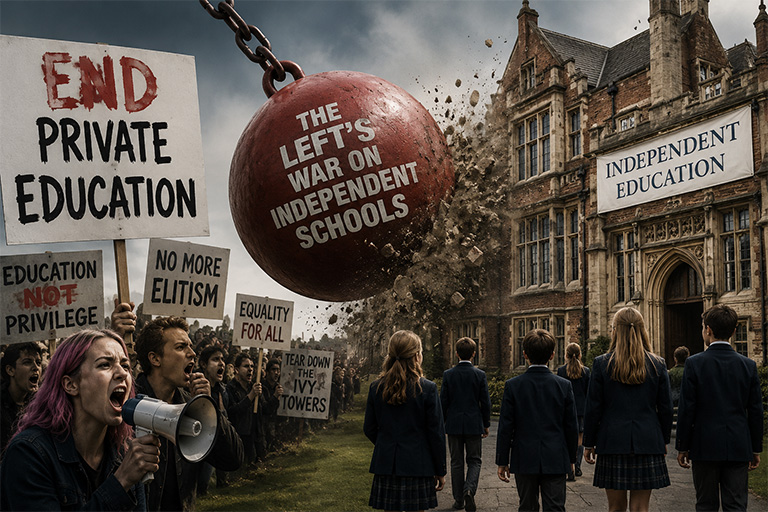
Why the Left Hates Independent Education
The attack on private education is often presented as a crusade for equality. In reality, it is something quite different. Independent schools challenge some of the Left's deepest assumptions about society, proving that parental choice, competition and individual aspiration can outperform state control. That is why the campaign against them persists despite the costs, the consequences and the evidence. The target is not what independent schools do. The target is what they represent.
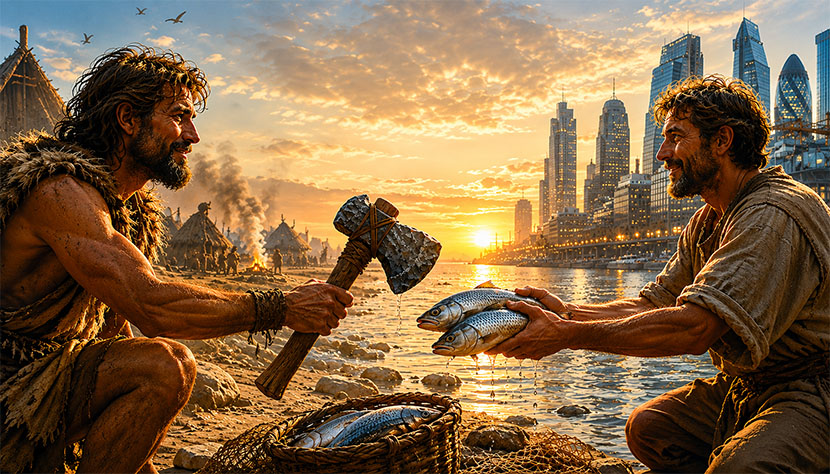
We Are All Born Capitalists
Capitalism is often portrayed as a modern invention imposed upon society by financiers and corporations. In reality, it is simply the natural extension of ordinary human behaviour: specialisation, cooperation and voluntary exchange. From a Neolithic tribesman trading a stone axe for two fish to the complex global markets of today, free exchange has always allowed individuals to coordinate knowledge, allocate resources and improve living standards more effectively than central planning ever could.