
Andy Burnham Is Not the Answer
Behind the northern branding and polished rhetoric lies the same failed faith in state control, bureaucratic expansion and the politics of managed decline.


Andy Burnham Is Not the Answer Britain Needs
Andy Burnham seems to have become the acceptable face of Labour populism. He is presented as the "King of the North", at the same time both regal and supposedly more in touch with ordinary voters than the London-centric technocrats who dominate Westminster. To some Conservatives disillusioned with managerial politics, Burnham may even appear faintly attractive: socially smoother than the hard Left, patriotic in tone, and capable of speaking in plain English.
This is a profound misreading of both the man and the moment.
Britain does not need another sentimental social democrat to oversee our managed decline with faux warm rhetoric. It does not need a politician who embodies the old assumptions of the British state: that somehow higher spending, more bureaucracy and regulation, and strong central planning can lead to growth. And it certainly does not need someone whose political instinct has consistently been to expand public dependency while avoiding the deeper structural problems undermining the country.
They say that doing the same thing over and over again while expecting different results is the definition of insanity. Both Britain and the EU have for decades subscribed to the theory that somehow bureaucrats and politicians can grow the economy through central planning. When this has invariably failed - as it always does - the answer has been to add even more bureaucrats and even stronger central control. Burnham represents a continuation of this misguided tradition.
As a cabinet minister under Gordon Brown, Burnham was part of the very Labour establishment that helped leave Britain economically fragile before the financial crisis. He served as Chief Secretary to the Treasury, Culture Secretary and then Health Secretary during the dying days of New Labour. This was not an outsider challenging a failing system. It was a loyal insider defending it.
His defenders now attempt to portray him as some kind of anti-establishment northern insurgent. Yet Burnham spent years fully immersed in the Westminster machine he now criticises as the "Westminster bubble". Like many career politicians, he only discovered the virtues of decentralisation and anti-metropolitan rhetoric after his ambitions in Westminster stalled.
His current economic ideas should alarm anyone serious about Britain's long-term future. Burnham advocates re-nationalisation of energy, water and rail, higher taxes on top earners, massive public borrowing and substantial new housing spending programmes. This is presented as pragmatic localism. In reality, it is simply old-fashioned Labour statism with regional branding.
At a time when Britain faces stagnant productivity, crippling debt, demographic pressure and declining competitiveness, Burnham's answer is more public expenditure funded by more borrowing. It is the politics of comforting illusion. Britain cannot spend its way back to dynamism through ever-expanding state management.
Burnham's mayoral record is far from the unqualified success story his admirers claim.
The "Bee Network" and bus franchising model, often cited by the Left as proof that Burnham can "get things done", has an average rating of 1.3 stars on TripAdvisor. It seems users are not overly impressed by the renationalised service. As the Soviets learned, the state is not overly good at delivering good user experiences.
Yet this obsession with state-controlled transport systems reflects a wider instinct running throughout Burnham's politics: a deep faith that bureaucratic coordination is inherently superior to markets and competition. Britain has already spent decades trapped in precisely this mindset.
Meanwhile, many of the social problems Burnham promised to tackle remain unresolved or have worsened. He pledged to end rough sleeping in Greater Manchester by 2020 - a target he openly failed to meet. In fact, many believe it is getting worse under his leadership.
This matters because Burnham's political appeal rests heavily on emotional presentation. He projects empathy extremely effectively. He speaks fluently about community, fairness and dignity. But politics is not therapy. At the end of the day, competence and results matter - not emotional tone.
Britain today suffers not from a shortage of compassionate managerialism, but from a shortage of seriousness about national renewal. The country requires politicians willing to confront uncomfortable truths: unsustainable welfare burdens, low productivity and uncontrolled migration pressures, coupled with cultural fragmentation, energy insecurity and a state apparatus that increasingly struggles to perform basic functions.
Burnham rarely confronts such questions directly because his political tradition remains fundamentally redistributive rather than regenerative. His instinct is to cushion decline rather than reverse it.
What Britain requires now is not another eloquent administrator of decline wrapped in northern branding. It requires leadership prepared to face uncomfortable truths - rebuilding the core functions of the state while shrinking destructive state dependency.
Andy Burnham is an accomplished political performer. He is personable, media-savvy and tactically adaptable. But Britain does not need a good performance. We need a change of political direction that accepts that rhetorical empathy is not the same thing as national renewal.
Andy Burnham offers just more of what has already been tried and failed.
Also by Julian March
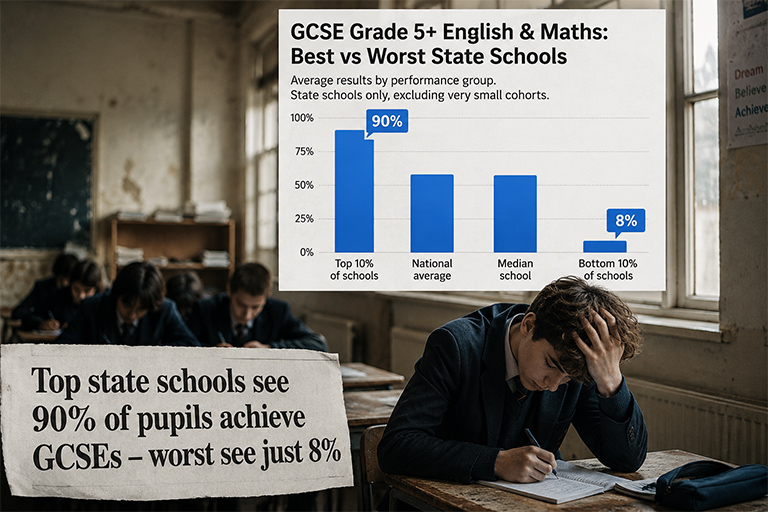
Abolishing Private Schools Will Hurt the Weakest in Society
Britain's greatest educational divide is not between private and state schools, but between the best and worst state schools. Abolishing independent education would not change who succeeds. It would simply redirect affluent, ambitious and well-connected parents into the state sector, leaving the weakest pupils competing for even fewer opportunities.

The Great British Pyramid Scheme
Britain has built far more than a housing market. It has built an entire economic model upon ever-rising property values. As house prices soared, politicians congratulated themselves on “growth”, homeowners refinanced, banks expanded lending and the country consumed against paper wealth. But property prices cannot indefinitely outgrow purchasing power. Now, with transactions slowing and affordability breaking down, Britain is beginning to discover what happens when an economy built on asset inflation starts running out of road.
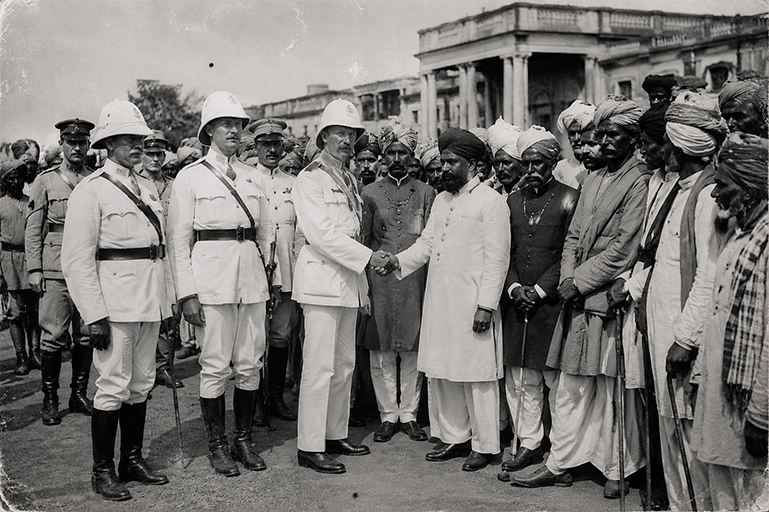
The Empire: Ashamed of Our Greatest Achievement
Modern Britain has developed an almost neurotic inability to discuss the British Empire honestly. We are encouraged to remember only the sins and never the achievements. Yet judged against the age in which it existed, the Empire abolished slavery on a global scale, spread parliamentary institutions and left behind legal and political systems still relied upon across much of the world today.