
The Empire: Ashamed of Our Greatest Achievement
Britain’s imperial past was flawed, imperfect and at times severe — but it also spread law, suppressed slavery and laid the foundations of much of the modern world.

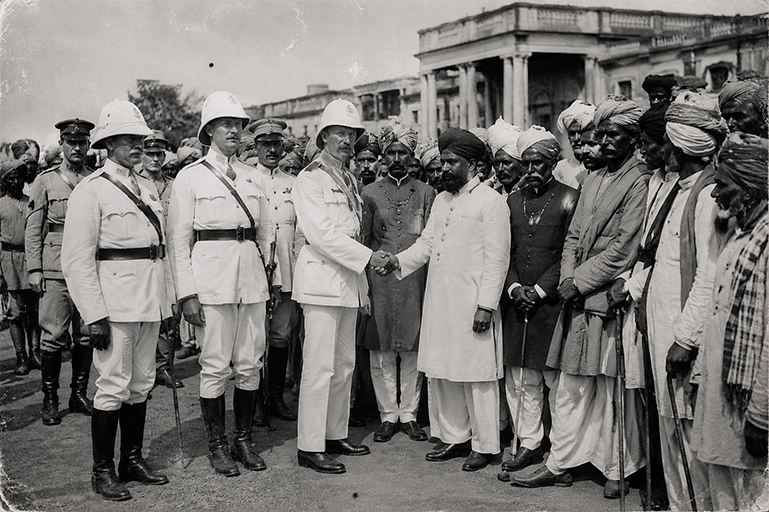
The British Empire is one of those subjects on which modern Britain has almost forgotten how to think.
Mention it in polite company and the air changes. Faces tighten. Someone reaches for the approved vocabulary. We are expected to speak of Empire either with theatrical shame or with a sort of moral fury. Anything more balanced is treated as faintly improper.
Yet history is not a morality play written for undergraduates. Great powers do not expand by handing out constitutional leaflets and cups of tea. Power is usually rough. The Roman Empire was not built by committee. Nor were the Ottoman, Mongol, Spanish, Russian or Chinese empires. The question is not whether the British Empire was perfect. Plainly it was not. The question is whether, judged in the round and against the world in which it existed, it was overwhelmingly a force for good.
The answer is yes.
One of the oddities of modern anti-imperial rhetoric is that Britain is often blamed not simply for its own faults, but for the existence of power itself. The world before British influence was not some peaceful tapestry of harmonious peoples, rudely interrupted by men in red coats. Much of it was governed by dynasties, warlords, slave traders, pirates, tribal raiders and local despotisms. In many places, British rule did not replace liberty. It replaced other forms of domination, often harsher and less restrained.
Start with slavery. One would hardly know from much modern commentary that Britain became the greatest anti-slavery power in history. After abolishing the slave trade in 1807 and slavery itself in 1833, Britain used the Royal Navy to hunt down slave ships across the Atlantic and Indian Oceans. This was not a gesture. It was expensive, dangerous and sustained over decades. British sailors died doing it. British taxpayers paid for it. British diplomacy pressed other nations to follow.
That alone should complicate the fashionable caricature.
Nor was the Empire merely an exercise in extraction. It carried with it institutions which much of the world still uses: common law, parliamentary government, professional civil services, commercial courts, universities, railways, ports, postal systems and the English language. These things were not trivial ornaments. They were the machinery of modern life.
India is the obvious example. Independent India quite properly celebrates its independence, yet it retained many British-built institutions because they worked. Parliamentary democracy, the common law, the civil service and English as a link language all helped hold together a country of staggering size and diversity. It is easy to denounce imperial rule in the abstract. It is harder to deny the practical inheritance it left behind.
The same can be seen elsewhere. Singapore became one of the most successful states in the world on foundations laid under British rule. Hong Kong became a great commercial and financial centre. Across the Commonwealth, courts, parliaments and public administrations still bear the marks of British influence. People do not usually preserve systems they regard as useless.
Of course there were grave mistakes. There was arrogance, cruelty, complacency and, at times, brutality. There were famines mishandled, local customs misunderstood, and military actions which deserve condemnation. No serious defence of the Empire needs to pretend otherwise.
But perspective matters. To say the British Empire had sins is not to say it was uniquely sinful. Compared with many rival empires, it was often strikingly liberal. It developed legal limits upon authority. It promoted trade more than simple plunder. It built institutions rather than merely draining territories dry. It abolished slavery when many others still profited from it.
There is also the question rarely asked by critics: compared with what?
Would the world have been better had Britain withdrawn and left the field to the Belgian Congo, German colonialism, Russian expansion or Japanese imperial ambition? The answer is far from obvious. The decline of British power did not automatically produce peace, democracy or prosperity. In many places, it produced coups, civil wars and one-party states.
The Empire was also not sustained by British force alone. It depended upon local soldiers, judges, merchants, clerks, princes, officials and professionals. The Indian Army was overwhelmingly Indian. Colonial administrations were filled with local intermediaries. This does not make imperial rule democratic, but it does make nonsense of the cartoon in which Britain simply sat upon the world with a boot.
There remains, too, the stubborn fact of cultural inheritance. Cricket, the English language, parliamentary procedure, common law and Commonwealth ties have endured because they proved useful, attractive or both. They were not all maintained at gunpoint. Many former colonies took what they wanted from the imperial inheritance and made it their own.
Perhaps the greatest irony is that the British Empire helped create the very world that later judged empire obsolete. Free trade, maritime security, legal order, representative government and abolitionist morality were all strengthened by British power. The Empire helped spread the standards by which it would eventually be criticised.
That is not hypocrisy. It is history.
The British Empire was not a spotless moral enterprise. No empire ever was. It was ambitious, paternalistic, sometimes unjust and sometimes severe. But it also suppressed slavery, spread law, built institutions, opened trade routes and carried ideas of ordered liberty to parts of the world where they had not previously taken root.
To remember only the crimes is not honesty. It is another form of propaganda.
A mature country should be able to look at its past without either swagger or self-loathing. Britain has much to regret, but also much to be proud of. The Empire was flawed because it was human. But judged fairly, and not by the cramped prejudices of the present moment, it was overwhelmingly a force for good.
Also by Julian March
Abolishing Private Schools Will Hurt the Weakest in Society
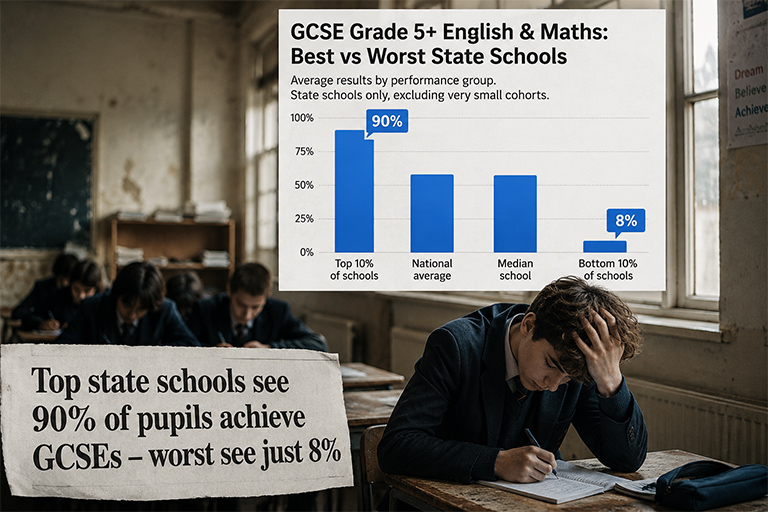
Britain's greatest educational divide is not between private and state schools, but between the best and worst state schools. Abolishing independent education would not change who succeeds. It would simply redirect affluent, ambitious and well-connected parents into the state sector, leaving the weakest pupils competing for even fewer opportunities.

The Great British Pyramid Scheme
Britain has built far more than a housing market. It has built an entire economic model upon ever-rising property values. As house prices soared, politicians congratulated themselves on “growth”, homeowners refinanced, banks expanded lending and the country consumed against paper wealth. But property prices cannot indefinitely outgrow purchasing power. Now, with transactions slowing and affordability breaking down, Britain is beginning to discover what happens when an economy built on asset inflation starts running out of road.

Andy Burnham Is Not the Answer
Andy Burnham has become the acceptable face of Labour populism: media-friendly, emotionally fluent and packaged as a champion of the North. But beneath the carefully constructed image lies a familiar political instinct — more state control, more public spending and more bureaucracy. Britain does not need another eloquent manager of decline. It needs a fundamental change of direction.