
One Rule for Politicians, Another for You
From tax investigations to political scandals, Britain increasingly appears to operate under two separate systems: one for ordinary citizens and another for the governing elite.

For ordinary people, the modern tax system - or at least the modern tax collection - is unforgiving. Miss a deadline, misunderstand a regulation or rely on the wrong advice and HMRC will happily descend upon you with threats, penalties and fines.
Small business owners, tradesmen and landlords know this all too well. The taxman is rarely sentimental when dealing with the public. And yet, when members of the political class find themselves in difficulty, the rules suddenly seem far more flexible.
The Angela Rayner stamp duty affair is only the latest example of a pattern that has become increasingly difficult to ignore. Rayner underpaid £40,000 in stamp duty on a Brighton flat purchase. Despite being advised that tax was likely due and she should seek specialist advice, she failed to do so and simply decided not to pay any tax. Under normal circumstances, that combination alone would place an ordinary taxpayer squarely in HMRC’s firing line for "carelessness" penalties. Tax experts openly admitted they were astonished no penalty was imposed.
Dan Neidle, hardly a fire-breathing populist, described the outcome as "mystifying". Other tax professionals openly stated that clients in comparable situations would almost certainly have faced fines. Yet somehow, in this particular case, HMRC concluded there had been no carelessness at all.
One is left wondering what exactly the word "carelessness" now means in Britain. If ignoring repeated advice to seek specialist tax guidance before underpaying tens of thousands of pounds does not qualify, what does?
For millions of ordinary citizens, the answer is painfully obvious: the rules increasingly appear to operate differently depending on whether you're a politician or not.
This sense of double standards has become one of the defining political feelings of our age. Across Britain and much of Europe, there is a growing perception that an interconnected political, bureaucratic and professional elite inhabits a different moral and legal universe from the people they govern.
The ordinary citizen is expected to obey every regulation, however absurd. They must separate their recycling correctly, complete endless forms, pay ever-rising taxes and navigate a labyrinth of rules that even specialists struggle to understand. If they fail, penalties arrive swiftly.
But for politicians, senior officials and well-connected insiders, there always seems to be an explanation, an exemption or an exercise of "discretion".
During the Covid years, the public saw ministers impose restrictions upon millions while simultaneously breaking their own rules behind closed doors. Across Europe, voters watched political leaders lecture citizens about environmental sacrifice while flying privately between conferences to discuss carbon reduction. In Brussels, the European Union speaks endlessly about transparency while operating through sprawling layers of unelected commissioners, committees and negotiations almost entirely invisible to ordinary Europeans.
The problem is not merely hypocrisy. Human beings have always been hypocritical. The deeper issue is that many people now believe there is effectively a protected class emerging within Western democracies.
Consider how aggressively rules are enforced against ordinary people: Banks freeze accounts over minor compliance concerns. Transactions are monitored. Cash usage is treated with suspicion. A missed tax payment can quickly escalate into a nightmare of letters, surcharges and investigations.
In 2024, a Stoke-on-Trent couple was fined £1,200 after clearing up rubbish from the street, because they "had failed to transfer household waste to an authorised authority".
Meanwhile, politically connected figures repeatedly seem to escape consequences that would crush an ordinary citizen financially.
Perhaps each individual case can be explained away in isolation. Officials insist procedures were followed. Regulators claim decisions were made independently. Technicalities are cited. Context is invoked. But politics is not merely about technical correctness. It is also about public confidence. And public confidence collapses when the same institutions that behave ruthlessly toward the public appear endlessly forgiving toward the governing class.
The irony is that this elite culture often disguises itself as fairness and compassion. Modern progressive politics speaks constantly about equality, inclusion and justice. Yet in practice, it frequently produces a society where connections, institutional status and ideological alignment matter more than equal treatment under the rules.
This is politically dangerous territory. Stable democracies ultimately depend on trust that laws are applied fairly and consistently. Once large numbers of people cease believing that, cynicism inevitably hardens into resentment. And resentment, once established, is extraordinarily difficult to reverse.
The British public are a tolerant people. They will forgive mistakes. They will even forgive incompetence. What they struggle to forgive is the sense that there is one rule for them and another for the people ruling over them.
Also by Dominic Harbury

Starmer’s Britain Is Drifting Back to the Failed Politics of the 60s and 70s
Sir Keir Starmer promised to drag Labour into the modern age. Instead, his government is beginning to resemble a political time machine back to the 1970s: expanding union power, nationalising industry, edging Britain closer to Brussels and piling debt upon debt onto an already stagnant economy. Britain has seen this experiment before — and it did not end well.
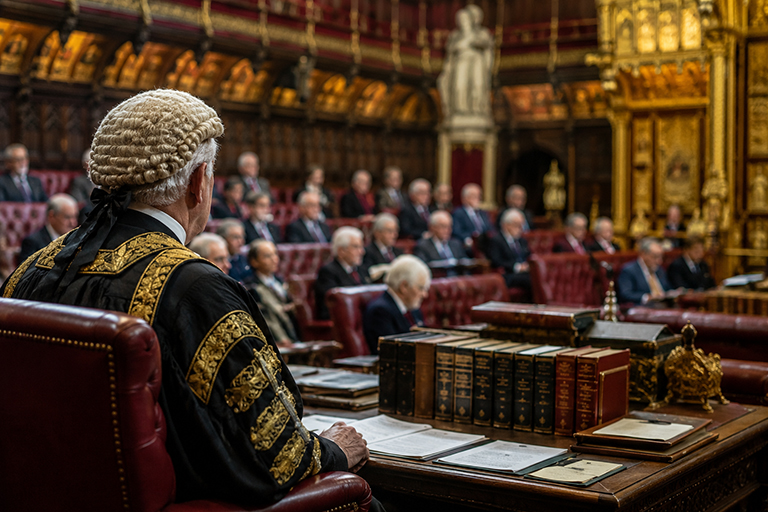
Britain Is Losing More Than Titles in the Assault on the Hereditary Peers
The campaign against hereditary peers is presented as democratic progress, yet it threatens to remove some of the House of Lords’ most experienced and independent voices. From distinguished diplomats such as the Earl of Oxford and Asquith to tireless public servants like Lord Russell of Liverpool, Britain is discarding a tradition of duty and expertise in favour of an increasingly shallow political class.

We Have Forgotten What Education Is Really For
Modern education has become obsessed with exams, careers and economic utility while neglecting the deeper purpose of learning itself. As Britain abandons classical liberal education, a generation is growing up increasingly detached from history, literature and the intellectual traditions that once sustained Western civilisation.